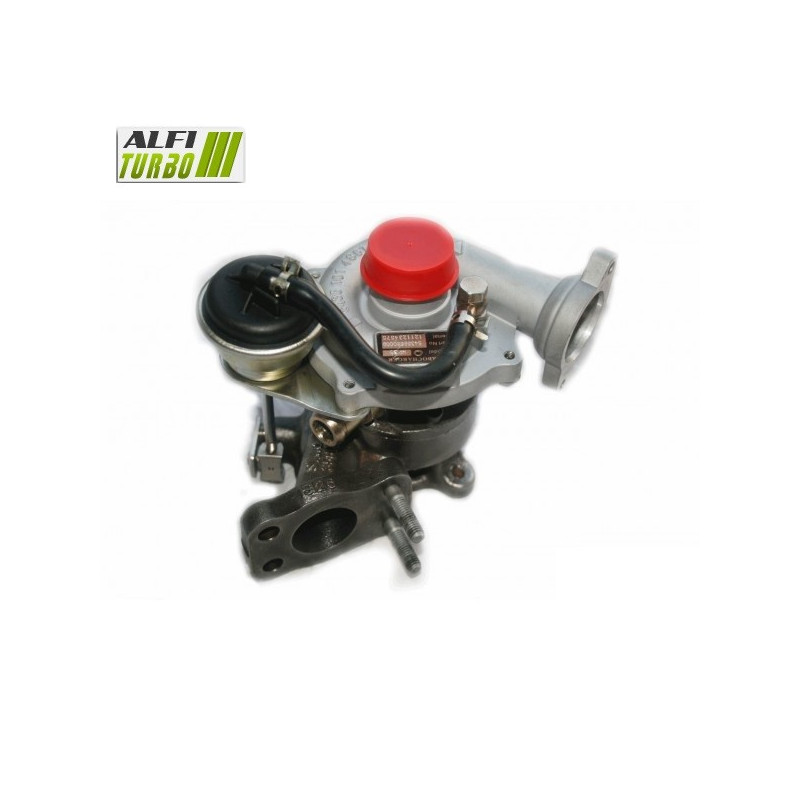
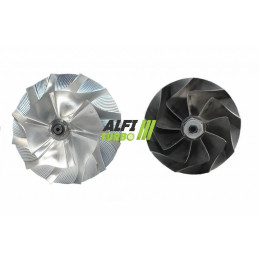
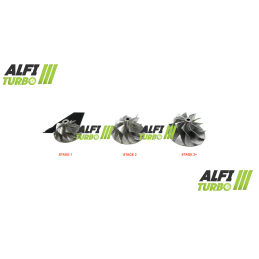
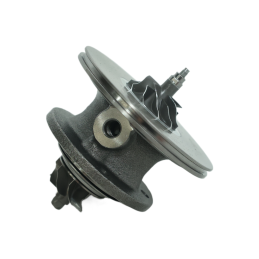
This hybrid turbo for engines 1.4 HDI and 1.The 4 TDCi is available in three documented trim levels. Every work placement offers dan MFS compressor wheel Performance, , da 360° bearing stop and d’high-speed balancing on a Cimat VSR bench’.
The applications listed include, in particular, models Citroën, , Ford, , Mazda, , Peugeot and Toyota. The assembly is of the plug & play, without any modifications to the vehicle’s system, subject to checking the turbo’s part number d’origin’.
Available products — Stage 1, Stage 2 and Stage 2+
Stage 1
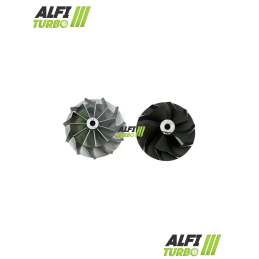
Compressor wheel: MFS Performance high-speed
Dimensions: 27.40 / 37.05 mm
Blade configuration: 5+5
Level: 360° stop
Balancing: 150,000 rpm on a Cimat VSR test bench
This setup is based on an MFS wheel Performance designed to regulate the flow rate d’air, whilst retaining a configuration plug & play. Its operation must remain consistent with the management of the engine and peripheral equipment.
Stage 2
Compressor wheel: MFS Performance high-speed oversized
Dimensions: 29.50 / 41.00 mm
Blade configuration: 7+0
Carter d’Admission:’ reprofiled for the wheel oversized
Level: 360° stop
Balancing: 150,000 rpm on a Cimat VSR test bench
The enlarged diameter and the re-profiling of the casing d’admission requirements allow’ d’to accommodate the new wheel’. This change may affect the available flow rate and the compressor’s behaviour, depending on the setting and the conditions dUse.
Stage 2+
Compressor wheel: MFS Performance high-speed oversized
Dimensions: 31.00 / 43.00 mm
Blade configuration: 7+7
Carter d’Admission:’ reprofiled for the wheel oversized
Level: 360° stop
Balancing: 150,000 rpm on a Cimat VSR test bench
This version features the largest documented Ferris wheel for this product. Its effectiveness depends on the overall engine set-up; a larger wheel alone does not guarantee better performance in all conditions.
What is a hybrid turbo ?
A hybrid turbo utilises a turbocharger design that has been adapted to accommodate modified internal components. Depending on the course, the preparation may cover the compressor wheel, its geometry, its dimensions, the re-profiling of the housing, the thrust bearing system and balancing.
The aim is d’adjust the compression capacity and flow rate’ dair. However, a hybrid turbo is not defined solely by the appearance of its impeller: the dimensions, aerodynamics and overall design are crucial.
MFS compressor wheel: standard or Performance ? ?
MFS stands for ‘Milled From Solid’, meaning a wheel machined from a solid block. This manufacturing process does not, on its own, guarantee an increase in throughput dair. A standard MFS wheel can retain a geometry equivalent to that d’origin’.
A standard MFS wheel can be just as shiny as an MFS wheel Performance. It is not its appearance that determines its performance, but its geometry and its ability to move more dair. For this product, the dimensions and blade configurations vary depending on the course selected.
Why does the geometry of the blades affect the flow rate? d’air ?
The compressor wheel draws in and then compresses the air fed to the engine. Its diameter, profile, height, width and the arrangement of the blades all influence its aerodynamic behaviour. The result also depends on the compressor housing, the turbine section, the boost pressure and the engine tuning. An increase in diameter can also affect the response time and the range doptimal use.
Reliability and balancing of the hybrid turbocharger
The 360° thrust bearing distributes the axial forces around the bearing. Each documented rotor is configured in this way and is balanced at 150,000 rpm on a Cimat VSR test bench, with the aim of minimising vibrations and stresses on the rotor. This balancing does not compensate for any faults in assembly or lubrication.
Engine remapping and tuning
It may be necessary to adjust the mapping and pressure management for make the most of the turbo’s features. Fuel injection, exhaust, air cooling d’Intake and transmission must be monitored in accordance with the level of preparedness’. The wastegate must be adjusted during fitting and remapping. No increase in power can be guaranteed without the appropriate engine configuration.
Turbo part numbers
OEM part numbers
9643675880
9643574980
9648759980
2S6Q6K682AA
1148107
1219456
2S6Q6K682AB
5004916901302
2S6Q6K682AD
2S6Q6K682AC
1488986
Y40113700C
1348618
0375G9
0375K0
148898
Manufacturer’s part numbers
5435-970-0001
5435-988-0001
54359700001
54359880001
5435-970-0007
5435-988-0007
54359700007
54359880007
5435-970-0009
5435-971-0009
5435-988-0009
54359700009
54359710009
54359880009
KP35-001
KP35-007
KP35-009
Compatible vehicles and assignments
Citroën
C1 (PM_, PN_) — 54 hp
Diesel 1.4 — June 2005 to September 2014
Engine code : 8HT (DV4TD)
C2 (JM_) — 68 hp
Diesel 1.4 — July 2003 to December 2009
Engine codes: 8HX (DV4TD), 8HZ (DV4TD)
C2 Enterprise (JG_) — 69 hp
Diesel 1.4 — November 2003 to April 2005
Engine code : 8HZ (DV4TD)
C2 Enterprise (JG_) — 68 hp
Diesel 1.4 — September 2006 to December 2009
Engine code : 8HX (DV4TD)
C3 I (FC_, FN_) — 68 hp
Diesel 1.4 — February 2002 to an unspecified date
Engine codes: 8HX (DV4TD), 8HZ (DV4TD)
C3 I (FC_, FN_) — 70 hp
Diesel 1.4 — July 2003 to February 2011
Engine code : 8HZ (DV4TD)
C3 I (FC_, FN_) — 75 hp
Diesel 1.4 — May 2005 to an unspecified date
Engine code : 8HX (DV4TD)
C3 II (SC_) — 68 hp
Diesel 1.4 — November 2009 to an unspecified date
Documented engine codes: 8HP (DV4C), 8HR (DV4C), 8HZ
C3 Pluriel (HB_) — 68 hp
Diesel 1.4 — April 2004 to an unspecified date
Engine codes: 8HX (DV4TD), 8HZ (DV4TD)
Xsara (N1) — 68 hp
Diesel 1.4 — January 2003 to March 2005
Engine code : 8HX (DV4TD)
Xsara Break (N2) — 68 hp
Diesel 1.4 — January 2003 to August 2005
Engine code : 8HX (DV4TD)
Xsara Coupé (N0) — 68 hp
Diesel 1.4 — January 2003 to March 2005
Engine code : 8HX (DV4TD)
Ford
Fiesta V (JH_, JD_) — 68 hp
Diesel 1.4 TDCi — November 2001 to June 2008
Engine codes: F6JA, F6JB
Fiesta V Van — 68 hp
Diesel 1.4 TDCi — October 2003 to December 2010
Engine codes: F6JA, F6JB
Fiesta VI (CB1, CCN) — 68 hp
Diesel 1.4 TDCi — August 2008 to September 2012
Engine codes: F6JB, F6JD
Fiesta VI Van — 68 hp
Diesel 1.4 TDCi — January 2009 to an unspecified date
Engine codes: F6JB, F6JD
Fusion (JU_) — 68 hp
Diesel 1.4 TDCi — August 2002 to December 2012
Engine codes: F6JA, F6JB
Mazda
2 (DY) — 68 hp
Diesel 1.4 — April 2003 to June 2007
Engine codes: F6JA, F6JB
Peugeot
1007 (KM_) — 68 hp
Diesel 1.4 — April 2005 to an unspecified date
Engine codes: 8HX (DV4TD), 8HZ (DV4TD)
206 Hatchback (2A/C) — 68 hp
Diesel 1.4 — September 2001 to April 2009
Engine codes: 8HX (DV4TD), 8HZ (DV4TD)
206 Hatchback (2A/C) — 69 hp
Diesel 1.4 — September 2002 to February 2007
Engine code : 8HX (DV4TD)
206 Saloon — 68 hp
Diesel 1.4 — September 2008 to an unspecified date
Engine code : 8HZ (DV4TD)
206 SW (2E/K) — 68 hp
Diesel 1.4 — July 2002 to February 2007
Engine code : 8HX (DV4TD)
206 Van — 68 hp
Diesel 1.4 — September 2001 to March 2009
Engine codes: 8HX (DV4TD), 8HZ (DV4TD)
206+ (2L_, 2M_) — 68 hp
Diesel 1.4 — January 2009 to June 2013
Engine codes: 8HR (DV4C), 8HZ (DV4TD)
207 / 207+ (WA_, WC_) — 68 hp
Diesel 1.4 — February 2006 to December 2015
Engine codes: 8HR (DV4C), 8HZ (DV4TD)
207 Hatchback Van (WA_, WC_) — 68 hp
Diesel 1.4 — April 2007 to an unspecified date
Engine codes: 8HR (DV4C), 8HZ (DV4TD)
307 (3A/C) — 68 hp
Diesel 1.4 — October 2001 to June 2005
Engine codes: 8HX (DV4TD), 8HZ (DV4TD)
307 Estate (3E) — 68 hp
Diesel 1.4 — March 2002 to June 2005
Engine code : 8HZ (DV4TD)
307 SW Estate Van (3E_, 3H_) — 69 hp
Diesel 1.4 — April 2002 to June 2005
Engine code : 8HZ (DV4TD)
Toyota
Aygo (_B1_) — 54 hp
Diesel 1.4 — July 2005 to August 2010
Engine code : 2W-ZTV
Additional technical specifications
Type: hybrid turbo
Engine options: 1.4 HDI / 1.4 TDCi
Fuel: diesel
Documented power ratings: 54, 68, 69, 70 and 75 hp
Editing: plug & play, without any changes to the installation
Assembly instructions
⚠️ WARNING — IMPORTANT BEFORE ASSEMBLY
Search for and correct the cause of the previous failure. Check the lubrication circuit, the supply and the return d’the oil and the cleanliness of the pipes’.
Check the intake and ensure there are no foreign objects. Carry out turbo boost in accordance with the relevant guidelines and follow the manufacturer’s instructions.
Wastegate adjustment and mapping must be carried out by a qualified professional. If a lubrication fault is not rectified, it may lead to the turbocharger failing again.
How do you choose the right turbo ?
Check the reference number engraved on the turbo dthe original, then compare the OEM and manufacturer part numbers. Also check the make, model, generation, body style, engine type and power output in hp, the assembly period and the engine code.
⚠️ Check your turbo’s part numbers
Before placing your order, Compare the part number on your turbocharger d’origin’ using the references given in this fact sheet. Having the same motor does not always guarantee compatibility.
If you are unsure, please contact us with the full part number of the removed turbocharger and the vehicle details.