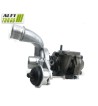

- Hybrid
ALFI ref.: HYB-G15-055
RENAULT MEGANE Scénic (JA0/1_) 1.9 dT (JA0K, JA0Y) / 1.9 dTi (JA0N) • 90 / 98 HP
1870 cm³ · Diesel
Source: TecDoc / TecAlliance
Check the OEM reference of your original turbo before buying: the model alone does not guarantee fitment.
| Manufacturer | Model | Type | Years | Power | Displacement | Engine code |
|---|---|---|---|---|---|---|
| RENAULT | CLIO II (BB_, CB_) | 1.9 dTi (B/CB0U) | 12/1999 – 05/2005 | 80 HP / 59 kW | 1870 cm³ | F9Q 780, F9Q 782 |
| RENAULT | CLIO II Fourgon/berline à hayon (SB0/1/2_) | 1.9 DTi (SB0U) | 02/2000 – 05/2001 | 80 HP / 59 kW | 1870 cm³ | F9Q 780 |
| RENAULT | ESPACE III (JE0_) | 1.9 dTi (JE0M) | 02/1999 – 10/2002 | 98 HP / 72 kW | 1870 cm³ | F9Q 722 |
| RENAULT | KANGOO (KC0/1_) | 1.9 dTi (KC0U) | 02/2000 – … | 80 HP / 59 kW | 1870 cm³ | F9Q 780, F9Q 790, F9Q 782 |
| RENAULT | KANGOO Express (FC0/1_) | 1.9 dTi (FC0U) | 02/2000 – … | 80 HP / 59 kW | 1870 cm³ | F9Q 780, F9Q 790, F9Q 782 |
| RENAULT | LAGUNA I (B56_, 556_) | 1.9 dTi (B56J) | 10/1997 – 03/2001 | 98 HP / 72 kW | 1870 cm³ | F9Q 717, F9Q 710, F9Q 716 |
| RENAULT | LAGUNA I Nevada (K56_) | 1.9 dTi (K56J) | 10/1997 – 03/2001 | 98 HP / 72 kW | 1870 cm³ | F9Q 717, F9Q 710, F9Q 716 |
| RENAULT | MEGANE I (BA0/1_) | 1.9 dT (B/SA0K, B/SA0Y) | 01/1996 – 08/2003 | 90 HP / 66 kW | 1870 cm³ | F8Q 786, F8Q 784 |
| RENAULT | MEGANE I (BA0/1_) | 1.9 dTi (BA08, BA0N) | 03/1997 – 02/2001 | 98 HP / 72 kW | 1870 cm³ | F9Q 731, F9Q 736, F9Q 730, F9Q 734 |
| RENAULT | MEGANE I (BA0/1_) | 1.9 dTi (BA1U) | 02/2001 – 08/2003 | 80 HP / 59 kW | 1870 cm³ | F9Q 744 |
| RENAULT | MEGANE I (BA0/1_) | 1.9 TDI | 09/1996 – 08/2003 | 94 HP / 69 kW | 1870 cm³ | F8Q 786, F8Q 784 |
| RENAULT | MEGANE I Break (KA0/1_) | 1.9 dTi (KA0N) | 03/1999 – 02/2001 | 98 HP / 72 kW | 1870 cm³ | F9Q 731, F9Q 736 |
| RENAULT | MEGANE I Break (KA0/1_) | 1.9 dTi (KA1U) | 02/2001 – 08/2003 | 80 HP / 59 kW | 1870 cm³ | F9Q 744 |
| RENAULT | MEGANE I Classic (LA0/1_) | 1.9 dT (LA0K, LA0Y) | 09/1996 – 08/2003 | 90 HP / 66 kW | 1870 cm³ | F8Q 786, F8Q 784 |
| RENAULT | MEGANE I Classic (LA0/1_) | 1.9 dTi (LA08, LA0N, LA0K) | 03/1997 – 02/2001 | 98 HP / 72 kW | 1870 cm³ | F9Q 731, F9Q 736, F9Q 730, F9Q 734 |
| RENAULT | MEGANE I Classic (LA0/1_) | 1.9 dTi (LA1U) | 02/2001 – 08/2003 | 80 HP / 59 kW | 1870 cm³ | F9Q 744 |
| RENAULT | MEGANE I Classic (LA0/1_) | 1.9 TDI | 09/1996 – 08/2003 | 94 HP / 69 kW | 1870 cm³ | F8Q 786, F8Q 784 |
| RENAULT | MEGANE I Coupé (DA0/1_) | 1.9 dTi (DA0N) | 03/1997 – 02/2001 | 98 HP / 72 kW | 1870 cm³ | F9Q 731, F9Q 736, F9Q 734 |
| RENAULT | Megane I Kombi van (KA_) | 1.9 DTI (KA1U) | 04/2001 – 07/2003 | 80 HP / 59 kW | 1870 cm³ | F9Q 744 |
| RENAULT | MEGANE Scénic (JA0/1_) | 1.9 dT (JA0K, JA0Y) | 01/1997 – 09/1999 | 90 HP / 66 kW | 1870 cm³ | F8Q 786, F8Q 784 |
| RENAULT | MEGANE Scénic (JA0/1_) | 1.9 dTi (JA0N) | 04/1997 – 09/1999 | 98 HP / 72 kW | 1870 cm³ | F9Q 736, F9Q 730, F9Q 734 |
| RENAULT | SCÉNIC I Monospace (JA0/1_, FA0_) | 1.9 dTi (JA0N) | 09/1999 – 08/2003 | 98 HP / 72 kW | 1870 cm³ | F9Q 731, F9Q 736, F9Q 734 |
| RENAULT | SCÉNIC I Monospace (JA0/1_, FA0_) | 1.9 dTi (JA1U) | 02/2001 – 08/2003 | 80 HP / 59 kW | 1870 cm³ | F9Q 744 |
| VOLVO | S40 I (644) | 1.9 DI | 03/1999 – 07/2000 | 95 HP / 70 kW | 1870 cm³ | D 4192 T2 |
| VOLVO | V40 Break (645) | 1.9 DI | 03/1999 – 07/2000 | 95 HP / 70 kW | 1870 cm³ | D 4192 T2 |
Source: TecDoc / TecAlliance
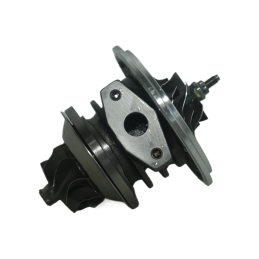
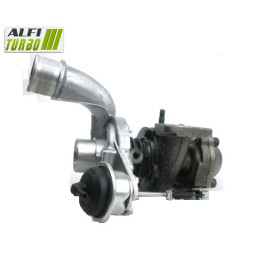
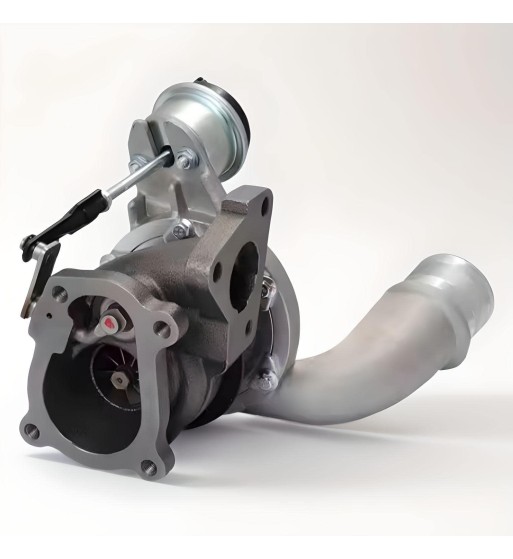
This hybrid turbo for engine variants 1.9 DTI is based on an architecture designed for in-house processing aimed at increasing throughput d'air'. Depending on the upgrade package chosen, it is fitted with a high-flow MFS compressor wheel, a 360° bearing retainer and additional modifications to the casings or the turbine section.
The documented assignments relate in particular to several Renault Espace, Kangoo, Laguna, Mégane and Scénic, as well as the Volvo S40 and V40. Compatibility must always be confirmed using the turbo’s part number d'origin'.
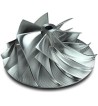
This product acts mainly on the compressor section. The high-flow MFS wheel is designed to adjust the compression capacity and volume d'air displaced, without change' d'the announced installation'.
The Stage 2 incorporates a compressor wheel oversized to a casing d're-profiled intake'. This mechanical modification enables d'to accommodate the new wheel and may alter the flow rate' d'air and the behaviour of the compressor'.
The Stage 3 includes documented modifications to the compressor and turbine sections. The result depends on the overall engine set-up; a larger wheel alone does not guarantee better performance in all conditions.
A hybrid turbo retains a turbocharger design compatible with its intended applications, whilst incorporating internal modifications. Depending on the course, these may cover the compressor wheel, the casings, the turbine wheel, the thrust bearing and balancing.
The aim is d'adjust the compression capacity and flow rate' d'air'. However, a hybrid turbo is not defined solely by the appearance of its impeller: its geometry, the machining of the housings and the overall coherence of the assembly are crucial.
MFS stands for ‘Milled From Solid’, meaning a wheel machined from a solid block. This is d'a manufacturing process which, on its own, does not guarantee an increase in throughput' d'air'.
A standard MFS wheel can retain a geometry equivalent to the original. An MFS wheel Performance may be designed with a geometry suited to the intended purpose, for example with a different profile or dimensions where such modifications are envisaged.
A standard MFS wheel can be just as shiny as an MFS wheel Performance. It is not its appearance that determines its performance, but its geometry and its ability to move more d'air'. The fact sheet d'The source states' for The MFS wheel features a forged aluminium design, which is lighter, wider and taller than the original, with 15 per cent more compression.
The compressor wheel draws in and then compresses the air. Its diameter, profile, height, width and the arrangement of its blades all influence its aerodynamic behaviour. The right geometry can move more d'air under certain conditions, but the result also depends on the casings, the turbine, the boost pressure and the engine tuning'. An increase in size may also affect the response time and the range d'optimal use'.
The documented 360° stop distributes axial forces over a wide area. The rotor is balanced at high speed – up to 150,000 rpm on a Cimat VSR test bench – in order to minimise vibrations and mechanical stresses. However, this balancing does not protect the turbocharger against incorrect fitting, inadequate lubrication or the presence of d'a foreign body'.
Making use of characteristics d'A hybrid turbo may require adjustments to the engine mapping, boost pressure and wastegate'. Depending on the level of preparation: fuel injection, exhaust, air cooling d'The intake, clutch or gearbox must also be checked or adjusted'. A hybrid turbo does not automatically guarantee a power boost without the right set-up.
⚠️ WARNING — IMPORTANT BEFORE ASSEMBLY
Search for and correct the cause of the previous failure. Check the lubrication circuit, the supply and the return d'oil, as well as the cleanliness of all the pipes'.
Check the intake and ensure there are no foreign objects present. Carry out the priming in accordance with the relevant guidelines and follow the manufacturer’s instructions.
If a lubrication fault is not rectified, it may lead to the turbocharger failing again.
Check the part number marked on the turbocharger d'origin and compare it with the OEM and manufacturer part numbers listed on this sheet'. Also check the make, model, generation, body style, engine type, power output, theYear the mounting code and the engine code, where available.
The fact that two motors are identical does not always guarantee compatibility, as there may be several different configurations.
⚠️ Check your turbo’s part numbers
Before placing your order, Compare the part number on your turbocharger d'origin' using the references given in this fact sheet. Having the same motor does not always guarantee compatibility.
If in doubt, please contact us, quoting the reference number clearly visible on the plate dIdentifying your turbocharger.
Download
WARNING — IMPORTANT BEFORE INSTALLATION
Before fitting, identify and rectify the cause of the previous fault. Check the lubrication circuit, the oil supply and return d as well as the cleanliness of all pipes.
Check the inlet for any foreign objects. Prime the system in accordance with the applicable recommendations and follow the vehicle manufacturer’s instructions.
A lubrication fault that is not rectified may lead to further damage to the turbocharger.
Check the part number of the original turbo d, the OEM and manufacturer part numbers, then compare the make, model, generation, body style, engine type, power output, production period and engine code.. An identical engine type may have several different configurations.
Check your turbo’s part numbers
Before ordering, compare the part number marked on your original turbo d with the part numbers listed in this specification sheet. An identical engine does not always guarantee compatibility.
If in doubt, please contact us with the part number clearly visible on your turbo and the vehicle’s precise details.
You might also like

check_circle
check_circle